ComparisonBread Machines
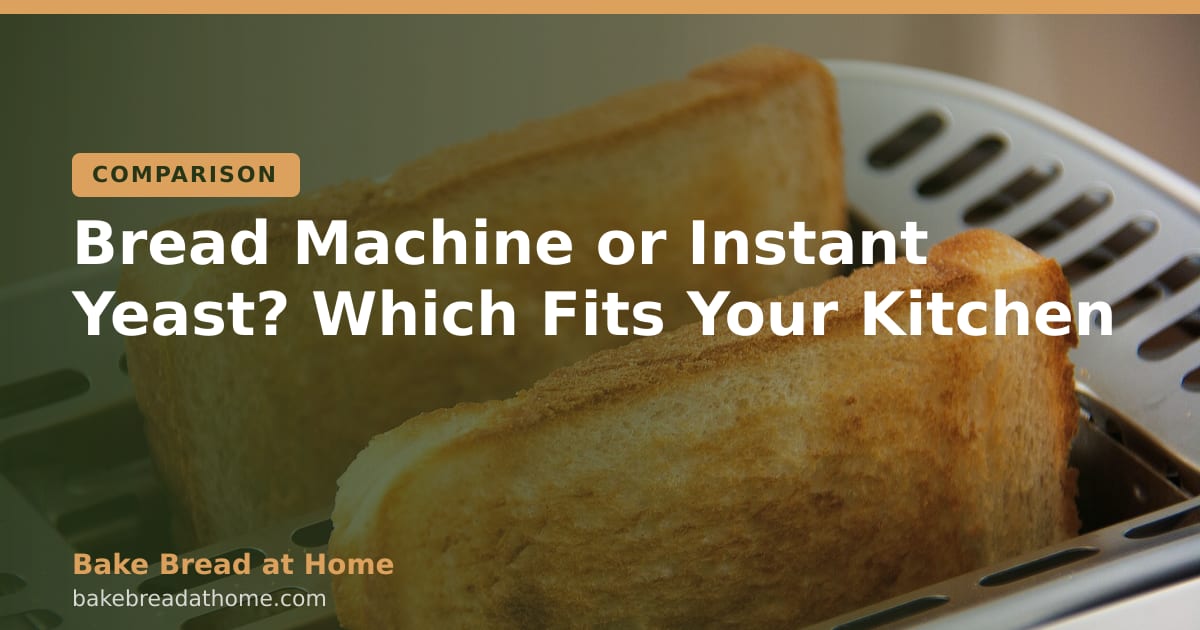
Bread Machine or Instant Yeast? Which Fits Your Kitchen
Disclosure: As an Amazon Associate I earn from qualifying purchases. Learn more
By Bread making and bread machine team6 min read
In this guide
Bread machine or instant yeast isn't really an either-or choice. Yeast is an ingredient, and a machine still needs it. The real decision is whether you want machine-assisted baking or hands-on baking in your oven.
At a Glance
- Pick a machine if you want easy sandwich loaves and have a spare counter spot.
- Pick hand baking if counter space is tight or you want to learn how dough works.
- Instant yeast works in both, so you'll buy it either way.
- Beginners in small kitchens can start with yeast and a basic recipe before buying an appliance.
- Bake often? Use both: a machine on weekdays, the oven on weekends.
Short answer: you need yeast either way
A bread machine is an appliance that mixes, kneads, lets the dough rise, and bakes. Instant yeast is the ingredient that makes the dough rise. Machine recipes typically call for yeast too.
So this article compares workflows, not rival products. Do you want a machine to do the work, or would you rather mix and shape by hand? A machine suits hands-off loaves and small-batch convenience. Hand baking suits you if you want more control and have no room for another appliance.
How each option works in practice
Bread machine
- Add ingredients in the order your manual specifies.
- Choose a program.
- Walk away and collect the loaf.
Many models have a timer, so you can wake up to fresh bread. The program controls timing and temperature for you.
Instant yeast and your oven
- Measure flour, water, salt, and yeast.
- Mix and knead by hand or with a stand mixer.
- Shape the dough and let it rise (proof).
- Bake in a standard oven.
Here you judge dough feel and proofing yourself. That takes practice, but it's how you learn. Instant yeast can go straight into the dry ingredients, which is why it works for both routes. Still, check each recipe instead of assuming.
Key differences that matter for a small kitchen
| Factor | Bread machine | Hand baking with instant yeast |
|---|---|---|
| Counter space | Needs a dedicated spot | Uses bowls you own and your oven |
| Hands-on time | Low; machine kneads and rises | Active kneading and shaping |
| Loaf shape | Standard pan-shaped loaves | Boules, baguettes, rolls |
| Control and learning | Hides dough steps | Teaches dough feel and fermentation |
| Yeast cost | Low-cost pantry staple | Same staple, so it won't decide this |
Experts advise weighing counter space, loaf capacity, and preset programs before buying a machine.
Which one should you pick?
- Bread machine: you want fresh sandwich loaves with little effort, you have room for an appliance, or you bake for a busy household.
- Hand baking: you want artisan shapes, have limited counter space, or want to learn the basics.
- Both: you bake often. Use the machine for weekday loaves and the oven for weekend projects.
Tip: If you're unsure, buy yeast and bake one basic loaf by hand first. You'll quickly learn whether you enjoy the process or would rather have it automated.
Products to consider for each route
Quick picks, strongest overall first:
- Best overall: Home Bakery Virtuoso Plus (BB-PDC20BA). Choose it if you're a serious baker who wants bakery-style loaves and a durable build. Skip it if you bake only now and then, since it's premium and reviewers call it expensive.
- Best for small kitchens: Compact Automatic Bread Maker (CBK-100). Choose it if counter space is tight. It was the smallest and lightest in one five-model test. Skip it if you need advanced settings, which the sources didn't confirm.
- Best budget for beginners: Programmable Bread Maker EBM8103B. Choose it if you want an affordable way to try machine baking. Skip it if you need family-size loaves, since the loaf capacity is 2 lb.
- Best yeast for either route: SAF Instant Yeast (Red). Choose it if you hand-mix or want one yeast for both methods. Skip it if you want zero hands-on work, since it still needs mixing, kneading, and rising.
Between the two budget machines, the Compact Automatic Bread Maker (CBK-100) wins on size, and Taste of Home notes its easy-to-read display. The Programmable Bread Maker EBM8103B wins if scheduled baking matters. Step up to the Virtuoso Plus only if you'll bake often enough to use its extra programs.
1. Home Bakery Virtuoso Plus (BB-PDC20BA)
Best for: Serious home bakers who want bakery-style loaves and long-term durability
Suits serious home bakers who want bakery-style loaves and a durable build. Reviewers describe it as premium-priced and overkill for occasional bakers.
What we like:
- Consistently rated top for bread quality
- Durable, long-term build according to reviewers
Keep in mind:
- Priced at the premium end, and reviewers call it expensive
- Overkill for occasional bakers
2. Compact Automatic Bread Maker (CBK-100)
Best for: Small kitchens and bakers with limited counter space
Suits small kitchens and bakers with limited counter space, at about 10.25 x 13.25 x 11.25 inches. Simple controls suit beginners, though reviews focus on basic loaves.
What we like:
- Fits tight counter space
- Simple controls suit beginners
Keep in mind:
- Reviews focus on basic loaves; advanced settings not confirmed in the sources I checked
3. Programmable Bread Maker EBM8103B
Best for: Beginners who want an affordable machine for basic loaves
Suits beginners who want an affordable machine for basic loaves. The 2 lb capacity limits family-size bakes.
What we like:
- Low cost entry point for trying machine baking
- Recommended for beginners
Keep in mind:
- Smaller loaf size limits family-size bakes
- Crust and texture results are not detailed in the sources I checked
4. SAF Instant Yeast (Red)
Best for: Hand-mixed loaves and bakers who want to skip a machine
Suits bakers who want to skip a machine and mix by hand. It mixes straight into dry ingredients without proofing, but needs kneading and rising time, and owners recommend airtight storage.
What we like:
- Reliable and versatile for everyday breads
- Simple, no-proof method suits small kitchens
Keep in mind:
- Needs hands-on mixing, kneading and rising time compared with a machine
- Owners stress airtight storage and checking the date
SAF Instant Yeast (Red) mixes straight into dry ingredients with no proofing. King Arthur Baking's test kitchen uses it as its go-to.
Owners say to store it airtight, often in the freezer, and to check the date. For sweet breads, the SAF Gold version is recommended.
Common mistakes when switching between the two
- Dropping a hand recipe into a machine. Check loaf size, liquid amounts, and when to add extras like nuts or fruit.
- Ignoring ingredient order. Don't put yeast on top of liquid unless your manual says so. Order affects timing.
- Expecting bakery texture. Machine loaves are pan-shaped and can be denser or softer than free-form bread.
- Using stale yeast. It causes flat loaves in either method. Keep it airtight.
- Worrying about labels. Instant, bread machine, and rapid rise yeast all contain the same thing, according to America's Test Kitchen.
Related Guides
- Bread Machine vs Stand Mixer: Which Bread Maker Fits Your Kitchen?
- Best Bread Machines for Sourdough in 2025: What Actually Works
- Best Bread Machines for Fresh Milled Flour: Honest Picks
Frequently Asked Questions
Can I use instant yeast in a bread machine?
Yes. Instant yeast is often sold as bread machine yeast or rapid rise, and America's Test Kitchen says they all contain the same thing. Follow your manual for where the yeast goes.
Is a bread machine worth it for a small kitchen?
It can be, if you'll use it often. Compact models like the Cuisinart CBK-100 are built for tight counters. If you bake rarely, hand baking saves the space.
Do I need a bread machine to bake good bread at home?
No. Instant yeast, a bowl, and your oven are enough. A machine just takes over the mixing, kneading, rising, and baking.
What is the difference between instant yeast and active dry yeast?
Instant yeast mixes right into dry ingredients. To swap it for active dry, America's Test Kitchen suggests using about 25 percent less instant yeast than the recipe's active dry amount.
Can I bake a machine recipe in the oven instead?
Often yes, but not by copying it directly. You'll need to knead, shape, proof, and bake it yourself. Check the recipe's liquid and loaf size first.
Bottom line
Buy yeast no matter what. Add a machine only if you want hands-off loaves and have the counter room. For tight spaces, start by hand, then consider the Cuisinart CBK-100 if you want automation.